Lalit Hundalani
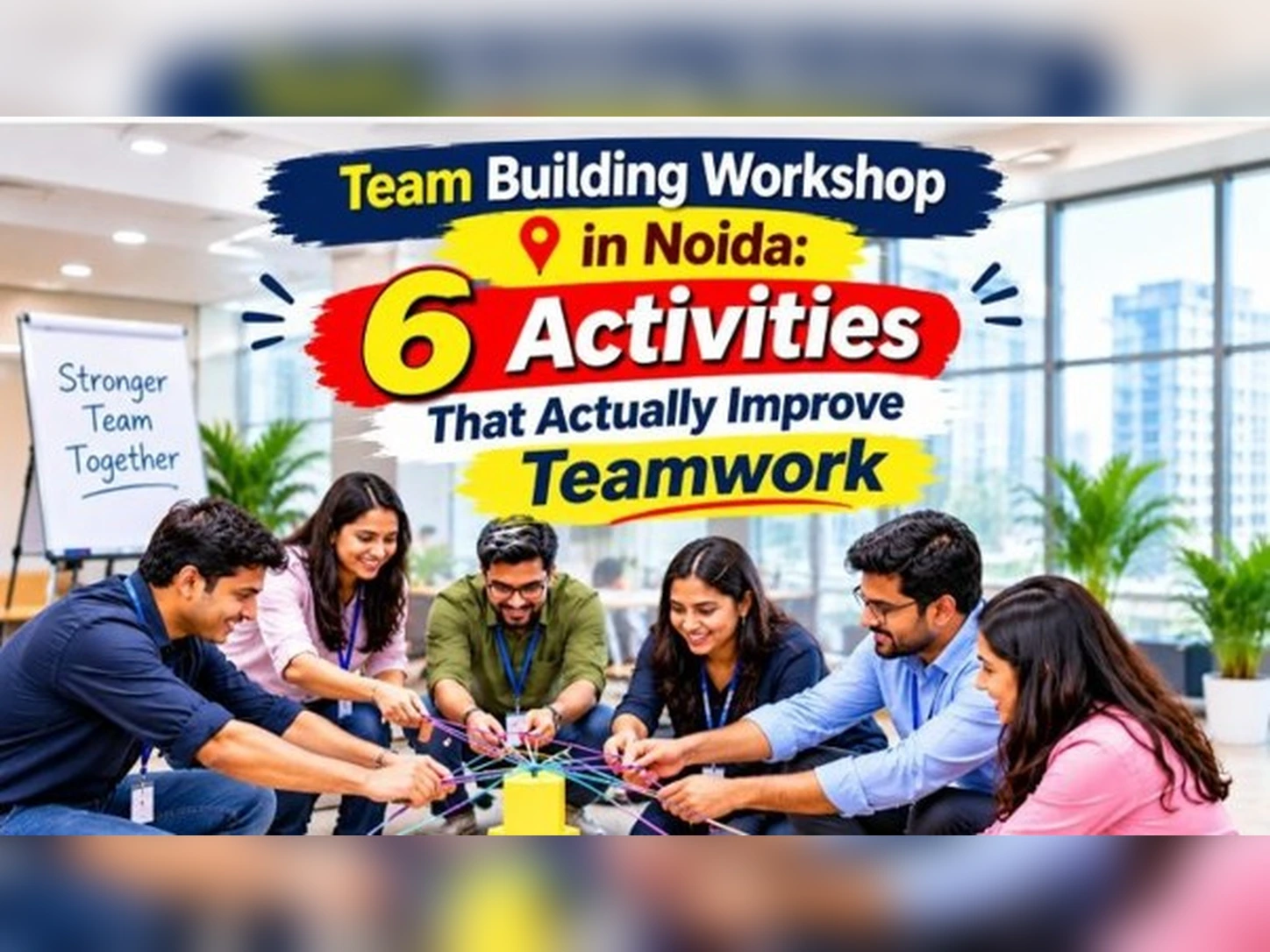
Team Building Workshop in Noida: 6 Activities That Actually Improve Teamwork
Most teams in Noida have sat through a team building day they would rather forget. A rushed lunch, a couple of games, a group photo for LinkedIn, and by Monday morning nothing has changed. The same two people still avoid each other. The same handover still falls through the gap.
That is not a fun problem. It is a design problem. A good team building workshop in Noida is not a day out. It is a structured session where people practise the exact behaviours your team struggles with: speaking up, handing work over cleanly, trusting each other and following through.
I am Lalit Hundalani, an ICF-certified coach and corporate trainer. After two decades in corporate leadership, and years of running workshops for teams across Noida, Greater Noida and Delhi NCR, I have watched which activities change how a team behaves and which ones only change the mood for an afternoon. Here are the six team building activities in Noida that work, why they work, and how to run them.
Quick answer
A good team building workshop in Noida uses short, purposeful activities that mirror real work. Six that consistently improve teamwork are a back-to-back communication challenge, a design-and-build challenge, a cross-functional case sprint, a trust and story circle, a role-swap exercise and a team charter session. Each targets a specific problem, such as unclear briefs, silos or low trust, and works best when it ends with an honest debrief and a written commitment.
Why most team building days don’t change anything
Before the activities, it helps to know why so many events fall flat. In my experience it comes down to four things.
- There is no The game is only the trigger. The learning happens in the conversation afterwards. Skip it and you have paid for entertainment.
- The activity does not match the A trust fall will not fix vague briefs or a missing handover process.
- Nothing happens Energy peaks on the day and has faded by the next review meeting.
- Managers watch from the If leaders do not take part, people quietly read the session as optional.
There is also good research on what effective teams actually need. Google studied its own teams and found that psychological safety came first, followed by dependability, structure and clarity, meaning and impact. That list is a handy filter. Every activity below targets at least one of those five.
6 team building activities at a glance
| S.NO | Activity | What it builds | Time | Group size |
|---|---|---|---|---|
| 1 | Back-to-Back Briefing | Clear communication | 30 to 40 min | Pairs, any total size |
| 2 | Design-and-Build Challenge | Collaboration under pressure | 45 min | Teams of 5 to 6 |
| 3 | Cross-Functional Case Sprint | Breaking silos, problem-solving | 60 to 90 min | Mixed teams of 5 to 6 |
| 4 | Trust and Story Circle | Psychological safety | 45 to 60 min | Groups of 4 to 6 |
| 5 | Role-Swap Exercise | Empathy, handling conflict | 60 min | Two departments |
| 6 | Team Charter and Commitment Circle | Accountability, follow-through | 60 to 90 min | Whole team |
1. Back-to-Back Briefing: for teams that keep reworking things
Pair people up and seat them back to back. One person gets a simple drawing made of basic shapes. Their partner gets a blank sheet and a pen. The first person describes the drawing and the second draws it without seeing the original. In round one, the drawer is not allowed to ask questions. In round two, with a new picture, they are.
Why it works: Almost every workplace miscommunication is an assumption in disguise. When the
two drawings are held up next to each other, nobody can say, “But I explained it clearly.” People see for themselves how much of a message lives only in the speaker’s head. Round two is usually far better, which makes the case for asking questions more convincingly than any slide could.
The debrief: What did the describer assume the listener already knew? What changed when questions were allowed? Where in our real work do we send briefs and never check that they landed?
Best for: teams with repeated rework, handovers between sales and delivery, and new managers learning to give instructions. If communication is your biggest gap, my guide to soft skills training in Noida goes deeper.
2. Design-and-Build Challenge: see how your team works under pressure
Give each team of five or six the same small pile of materials: paper, tape, string, straws. Set a clock of fifteen to twenty minutes and one goal, such as building the tallest free-standing structure that can hold something light. Then step back and watch.
You will see who takes charge, who goes quiet, who starts building straight away and who wants a perfect plan first. None of that is good or bad. It is simply information about how your team makes decisions when time is short.
Why it works: The task is low stakes, but the behaviours are real. People interrupt, defer, over-plan, or talk past the quiet person with the good idea, exactly as they do in a sprint meeting. In my experience, teams that build a rough version early and fix it as they go tend to beat teams that debate for ten minutes first. That is a useful thing for a team to discover about itself.
The debrief: How did we decide who did what? Was every voice heard? What would we do differently in the first two minutes if we ran it again?
Best for: newly formed teams, project kick-offs, and teams that either over-plan or rush.
3. Cross-Functional Case Sprint: break silos with a real business problem
If your team’s problem sounds like “us versus them”, start here. Mix people from different departments into teams of five or six, with one simple rule: nobody sits with only their own function.
Give each team a real, anonymised business problem, such as late deliveries, a customer escalation or a slow onboarding process. They have about forty minutes to find the cause, agree on three practical fixes and pitch them in three minutes to a senior leader.
Why it works: In many Noida workplaces, from the IT offices of Sector 62 and Sector 125 to the plants of Greater Noida, departments sit on different floors and meet mainly when something has gone wrong. A shared problem gives them a reason to talk before that happens. People start to see the pressure the other team is under, and blame gets harder to hold on to. If silos are your worry, these six signs your team needs corporate training will help you confirm it.
The debrief: What did you learn about another function that surprised you? Which of your fixes needs help from people who were not in the room? Who owns each one, and by when?
Best for: departments that blame each other, leadership teams, and companies after a merger or reorganisation.
4. Trust and Story Circle: build psychological safety, quietly
It looks too simple to work, which is why people underestimate it. Groups of four to six sit in a circle. Each person takes three minutes to share a short work story: a time they were out of their depth, and what helped. Everyone else just listens. No advice, no fixing, no topping the story. At the end, each listener says one thing they appreciated.
The manager or senior person should go first. When a leader admits a mistake out loud, everyone else gets permission to be human.
Why it works: People speak up, ask questions and admit errors only when they feel safe doing it, and Google’s research put that at the top of its list. You cannot order someone to feel safe, but you can create a moment where it happens. If you are curious about the psychology of why people hold back at work, I have written about how the subconscious mind shapes leadership.
One caution: keep it voluntary and keep it about work. Nobody should feel pushed to share something personal, and a good facilitator sets that boundary at the start.
Best for: teams where two or three voices dominate every meeting, and teams rebuilding trust after a tough quarter.
5. Role-Swap Exercise: walk in the other team’s shoes
Pick two functions that clash, say Sales and Operations, or Tech and Customer Support. Give them a scripted scenario, such as an urgent client escalation on a Friday evening. Then swap roles, so Sales plays Operations and Operations plays Sales. Run the scene, then run it again.
It gets funny quickly, and that is part of the point. Laughter lowers defences, and the reflection that follows lands much deeper. People discover pressures they had no idea the other side was carrying.
Why it works: Empathy is easier to feel than to be told about. This is the practical side of emotional intelligence, one of the modules in our corporate training and workshop programmes. It is also a
safe way to say hard things, because everyone is “in character”.
The debrief: What pressure did you not know about before today? What is one thing each team could change this week to make the other’s job easier?
Best for: recurring friction between two departments, and customer-facing teams who depend on delivery or tech teams.
6. Team Charter and Commitment Circle: turn the day into habits
Every workshop should end here. Without it, even the best activities fade. Ask the team to write a one-page charter together: how we communicate, how we disagree, how we flag risks early, and what we will stop doing.
Then go around the circle. Each person makes one specific, public commitment with a date. Not “I will communicate better”, but “I will send a written summary within an hour of every client call,
starting Monday.” Book two short check-ins, one at 30 days and one at 60.
Why it works: Clarity and dependability are two of the five things Google found in effective teams. A charter makes expectations visible, and a public commitment is much harder to drop quietly. For senior people, a follow-up with executive coaching or our Lead 2.0 programme can deepen the change, and my book Hacking the Productivity helps individuals who struggle with focus.
Best for: every team, as the closing session of any team building workshop in Noida.
Want these activities designed around your team?
Every team has a different gap, so I do not run a standard script. Tell me what is going wrong and I will suggest the right mix for your people. Share your requirement here or email connect@lalithundalani.com.
Which activity should you start with?
| If your team struggles with | Start with |
|---|---|
| Rework caused by unclear briefs | Activity 1: Back-to-Back Briefing |
| A brand-new team or a project kick-off | Activity 2: Design-and-Build Challenge |
| Departments blaming each other | Activities 3 and 5 |
| People rarely speak up in meetings | Activity 4: Trust and Story Circle |
| Good ideas but weak follow-through | Activity 6: Team Charter |
You do not need all six activities. A half-day workshop usually combines two or three, chosen for one clear goal.
Team building workshop vs team outing: what is the difference?
Both have a place. They just do different jobs.
| Comparison | Team outing | Team building workshop |
|---|---|---|
| Main goal | Relaxation and goodwill | Specific behaviour change |
| Structure | Open and informal | Planned activities with a debrief |
| Follow-up | Rarely | Check-ins at 30 and 60 days |
| Best for | Celebrating and recharging | Fixing communication, trust, silos and accountability |
If the budget allows, do both: the workshop in the morning, a relaxed lunch after it.
What a good team building workshop in Noida includes
- A clear Choose one or two outcomes, such as fewer escalations or more open meetings.
- Customised Your industry, team size and real challenges should shape the session, not a generic template.
- A skilled The debrief is where change happens, and it needs someone who can handle it well.
- Managers who take Leaders join the activities instead of observing them.
- Written commitments and a follow-up Otherwise the day is forgotten by Monday.
- Sensible timing and Start by 10 am and finish before the evening Expressway rush, so nobody spends the last hour watching the clock. Sessions can run at your Noida office, at an offsite venue, or online.
You can see the formats we offer, from half-day workshops to multi-week journeys, on our Training & Workshops page.
Mistakes that make team building workshops fail
- Making participation feel like People should be able to take part at their own comfort level.
- Choosing physically demanding games that leave some colleagues
- Forgetting remote and hybrid team
- Treating one event as the whole
- Judging success by how much people enjoyed it, instead of what changes
How to tell if it worked
Pick two or three observable behaviours before the workshop and check them at 30, 60 and 90 days: fewer escalations, shorter meetings, more people speaking up, cleaner handovers, on-time delivery. Smiles on the day are nice. Different behaviour in the next sprint is the real result. If you want to know whether training and coaching deliver lasting change, I have written about whether coaching and training really help.
Why teams across Noida choose Lalit Hundalani for corporate team building
Lalit Hundalani International is based in Noida and works with teams across Delhi NCR and pan-India. I am an ICF-certified coach, a 3X best-selling author and hold credentials from IIM Lucknow, with more than twenty years of corporate leadership behind me. My programmes have reached over 10,000 people across 25+ locations, in industries including IT, manufacturing, real estate, banking and e-commerce.
Please do not just take my word for it. Read independent feedback from participants and HR teams on our Google Business Profile in Noida, where the practice holds 500+ reviews and a 4.8 rating. To know the story behind the work, visit My Story. And if you would like a keynote to open the day, I also work as a motivational speaker in Delhi NCR for corporate events.
Frequently asked questions about team building workshops in Noida
What is a team building workshop?
A team building workshop is a structured session where a team practises skills such as communication, trust, collaboration and accountability through guided activities, followed by a debrief and clear commitments. Unlike a casual outing, it targets specific problems and aims for lasting change in how people work together.
How long should a team building workshop in Noida be?
A half-day of three to four hours works well for one focused goal, such as better communication. A full day suits deeper work, like breaking silos and building accountability together. For lasting change, add follow-up check-ins at 30 and 60 days, or run a multi-week learning journey.
What are the best team building activities for employees?
The most effective activities mirror real work: a back-to-back briefing for communication, a design-and-build challenge for collaboration, a cross-functional case sprint to break silos, a trust and story circle for psychological safety, a role-swap exercise for empathy, and a team charter for accountability.
How many people can join a team building workshop?
Anything from a small team of eight to ten up to a company of several hundred. For larger groups, participants are split into teams of five or six so that everyone stays involved, and the debrief runs in small groups first and then with the whole room.
Can the workshop be held at our office in Noida?
Yes. Sessions can run at your office anywhere in Noida, Greater Noida or Delhi NCR, at an offsite venue, or online. In-person sessions work best for role-play and trust-building, while virtual formats suit distributed teams.
Do team building workshops work for remote or hybrid teams?
Yes, with some adjustment. The back-to-back briefing, the story circle and the team charter all translate well to video calls, using breakout rooms for small groups. Design challenges and role-swaps work best when people share a room.
How much does a team building workshop in Noida cost?
Cost depends on the number of participants, the length of the programme, how much it is customised and the format, so there is no single fixed price. A good trainer will first understand your team’s goals and then propose a plan. You can share your requirement here to get a tailored proposal.
How do we know if a team building workshop worked?
Agree two or three observable outcomes before the session, such as fewer escalations, shorter meetings or more people speaking up, and review them 30, 60 and 90 days afterwards. Real change shows up in how the team works, not in how much they enjoyed the day.
Final thoughts: team building should change Monday, not just Friday
The best team building workshop in Noida is the one your team is still talking about three months later. Not because the games were clever, but because something shifted in how people work together. Pick activities that match your real problem, debrief honestly, and write down what each person will do differently.
If you are an HR leader, founder or manager looking for a team building workshop in Noida that is practical, customised and built around your team’s real challenges, I would be glad to talk. Book a
discovery call and we will design something that fits. You can also grab my free Leadership Playbook to get started today, or see what other teams say in our Google reviews.
About the author
Lalit Hundalani is an ICF-certified Life & Executive Coach, corporate trainer, motivational speaker and 3X best-selling author of Focus Your Way to Fortune and Hacking the Productivity. With two decades of corporate leadership experience and credentials from IIM Lucknow, he helps individuals and organisations across Noida, Delhi NCR and India grow with clarity and confidence. Explore coaching or get in touch.